
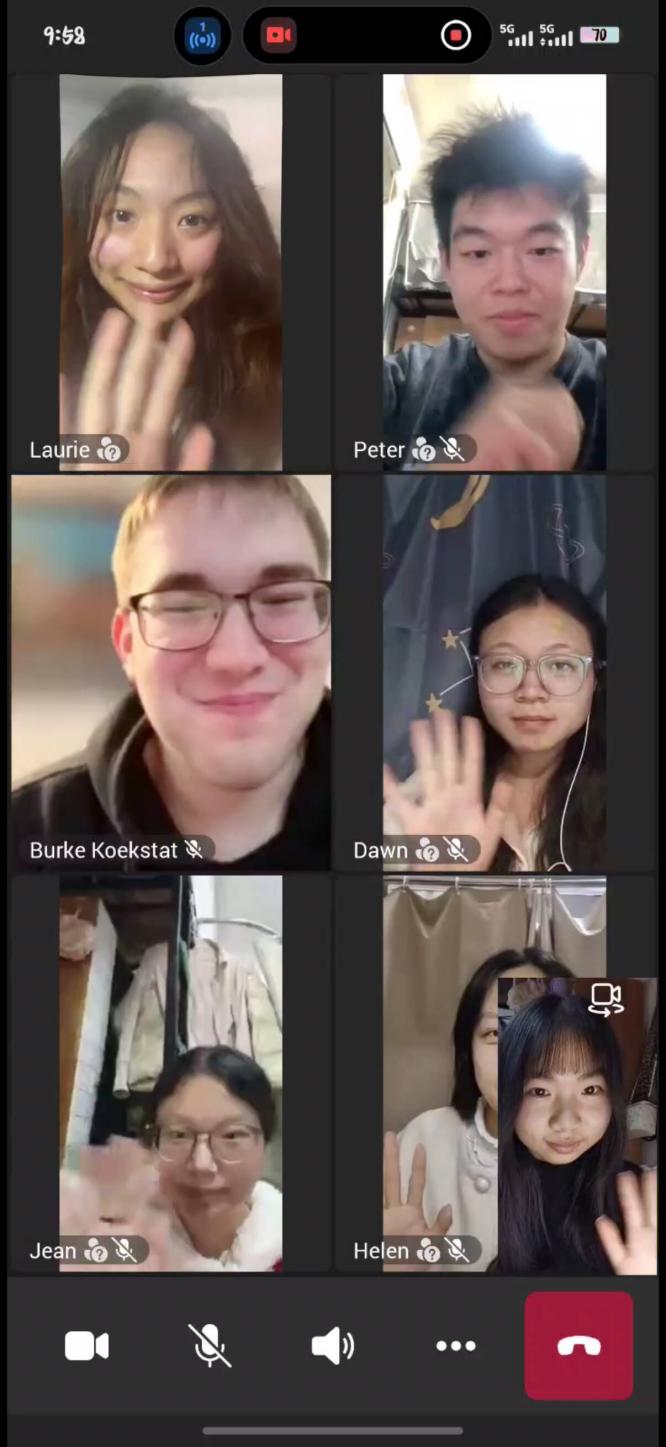
(通讯员 李紫霖)秉持“课堂研习中国文化,课外实践地方文脉”的育人思路,外国语学院依托《中国文化概要(英)》课程,搭建中外青年文学交流平台,推动荆楚古典文脉对外传播。本小组先后完成三场递进式线上研讨,围绕《九歌》的神祇形象、意象修辞、仪式体系,与温莎大学研习古希腊文学的学生展开多层次跨文明对话。
首场研讨于11月6日举行,双方对照湘君、大司命等中希神祇形象,辨析二者自然崇拜底色下的文化差异:古希腊神祇个性张扬、充满权力博弈,《九歌》诸神则以抒情为核心,寄托人神之间的思念怅惘,为后续研讨确立了清晰的比较方向。
11月16日的第二场研讨聚焦文本细节,中方结合楚地巫祭传统,解读香草、云水等意象作为人神沟通媒介的独特属性;外方分享古希腊颂歌、史诗中的自然意象象征体系,双方明确楚地意象服务于祭祀通神需求、古希腊意象侧重烘托神性铺陈叙事的核心差异,夯实了文本比较基础。
11月23日,第三场研讨将交流推向深入,中方梳理《九歌》十一篇完整仪式闭环:以《东皇太一》迎神,分祭天神地祇,《国殇》祭奠阵亡将士,《礼魂》作为前十场祭祀通用的送神短章串联起整套楚地祭祀乐歌体系,重点阐释《国殇》作为楚国官方公共祭歌、凭吊无名英灵的独特价值。外方介绍古希腊祭祀文学脉络,双方辨析荷马颂歌等作品的演变逻辑,对比发现古希腊英雄崇拜以安抚亡魂、守护城邦为核心,伯里克利葬礼演说完全脱离宗教祭祀仪式、以公民教化为核心,与嵌入《九歌》国家祀典体系、饱含家国哀思的《国殇》存在本质区别。
三场研讨由点及面层层深入,中加青年平等互鉴,向外阐释《九歌》承载的荆楚文化与家国情怀,一同品读古希腊文学的神话与祭祀内涵。
本次跨洋对话是《中国文化概要(英)》课程的重要实践环节,为学生提供了真实的跨文化输出场景,将课堂所学转化为英文阐释、比较思辨与国际传播能力,践行“用英语讲好中国文化”的课程目标。后续中方小组将整合研讨成果,完成英文展示,让古老东方文脉在跨洋对话中焕发新生。
Poetry as a Bridge, Dialogue Across the Ocean: Tracing the Literary Tradition of the “Nine Songs”, Conveying the Elegance of Jingchu Culture — The School of Foreign Languages Holds an Online Literary Seminar with the Department of Language, Literature and Culture of the University of Windsor (SessionIV): The Ritual System of the “Nine Songs”
(Correspondent: Li Zilin) Guided by the educational philosophy of “studying Chinese culture in the classroom and practicing local cultural heritage beyond it,” the School of Foreign Languages, relying on the course “An Overview of Chinese Culture (in English)”, has built a platform for literary exchange between Chinese and international youth, promoting the global dissemination of the classical Jingchu literary tradition. Our group has successively completed three progressive online symposiums, engaging in multi-layered cross-civilizational dialogue with University of Windsor students studying ancient Greek literature on the imagery of deities, metaphorical rhetoric, and ritual systems of the “Jiu Ge (Nine Songs)”.
The first symposium was held on November 6, in which both sides compared Chinese and Greek deities such as the Xiang River Goddesses and the Grand Marshal of Life (Da Si Ming), examining the cultural differences rooted in their shared foundation of nature worship: the deities of ancient Greek mythology are characterized by strong individual personalities and constant power struggles, whereas the gods of the Jiu Ge center on lyrical emotion, embodying the longing and melancholy between humans and gods. This established a clear comparative direction for subsequent discussions.
The second symposium on November 16 focused on textual details. The Chinese side, drawing on the shamanic sacrificial traditions of Chu, interpreted the unique role of imagery such as fragrant herbs and clouds and waters as media of communication between humans and gods. The international side shared the systems of natural imagery symbolism in ancient Greek hymns and epics. Both sides clarified the core difference: imagery in Chu serves the needs of sacrificial rites and divine communication, while ancient Greek imagery emphasizes the grandeur of divinity and narrative embellishment, laying a solid foundation for textual comparison.
On November 23, the third symposium deepened the exchange. The Chinese side outlined the complete ritual loop of the eleven poems of the “Jiu Ge (Nine Songs)”: “Dong Huang Tai Yi (The Great Spirit of the East)” welcomes the deities, separate hymns honor heavenly and earthly gods, “Guo Shang (Hymn to the Fallen)” mourns warriors who died in battle, and “Li Hun (The Summoning of Souls)”, as a closing hymn common to the preceding ten rites, ties together the entire system of Chu sacrificial music. Special emphasis was placed on the unique value of “Guo Shang” as an official public elegy of the State of Chu, commemorating nameless fallen heroes. The international side introduced the context of ancient Greek sacrificial literature, and both sides traced the evolution of works such as the Homeric Hymns. They concluded that ancient Greek hero worship centered on appeasing the spirits of the dead and protecting the city-state, and that Pericles’ Funeral Oration had completely departed from religious sacrificial ritual, centering on civic education—fundamentally different from “Guo Shang”, which was embedded in the national sacrificial system and permeated with feelings of family and nation.
Through three progressively deeper symposiums, Chinese and Canadian youth exchanged views as equals, jointly interpreting the Jingchu culture and patriotic sentiments carried by the “Jiu Ge” for international audiences, while appreciating the mythological and sacrificial connotations of ancient Greek literature.
This transpacific dialogue is a key practical component of the “Overview of Chinese Culture (in English)” course, providing students with an authentic cross-cultural communication setting, transforming classroom learning into the abilities to explain ideas in English, think comparatively, and communicate internationally—fulfilling the course goal of “telling China’s stories well in English.” Going forward, the Chinese group will consolidate the symposium outcomes and complete presentations in English, allowing this ancient Eastern literary heritage to be revitalized through transpacific dialogue.